The Rise of Layer 2 Solutions: Scaling the Future of DeFi Apps
Explore how the integration of Layer 2 solutions is revolutionizing decentralized finance by drastically reducing transaction costs and latency.
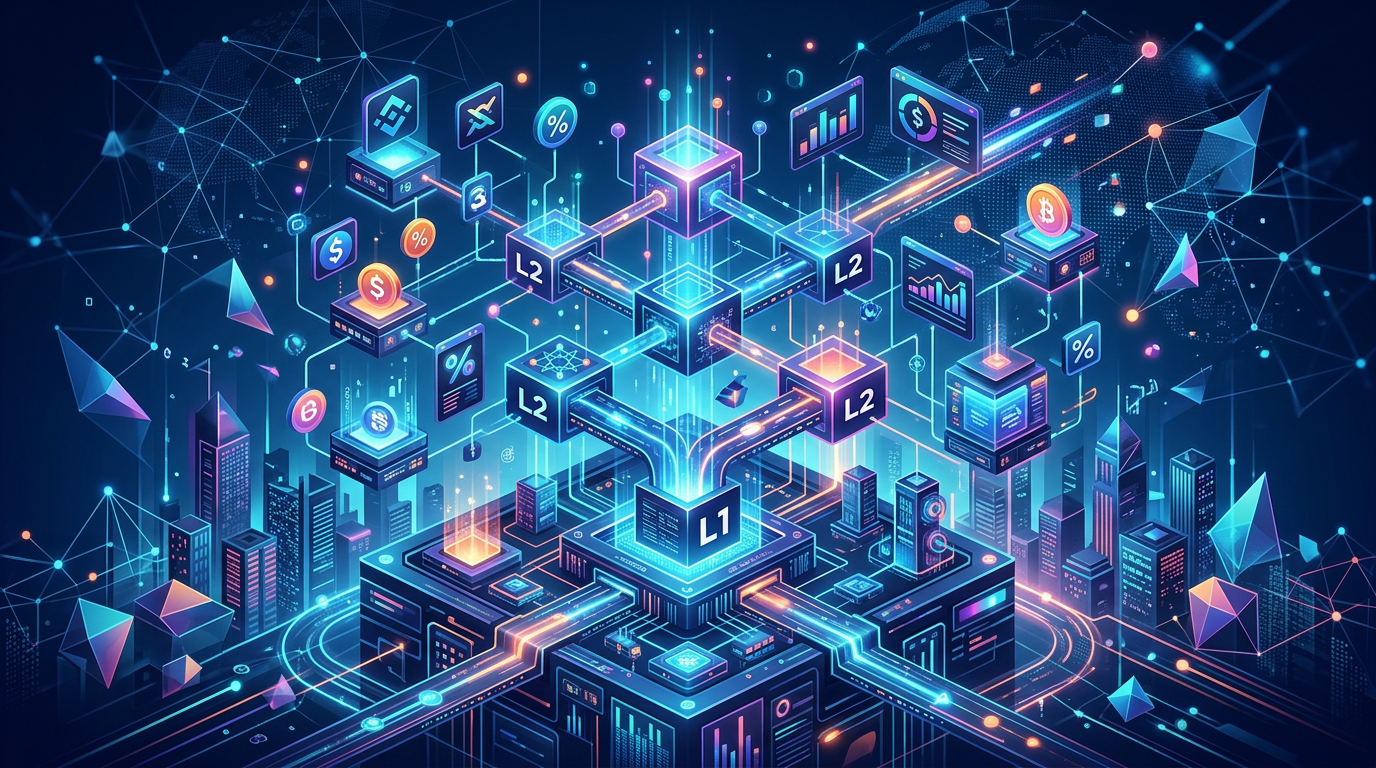
The decentralized finance (DeFi) ecosystem has undergone a radical transformation since the "DeFi Summer" of 2020. What began as a niche experiment in peer-to-peer lending and liquidity mining has grown into a multi-billion-dollar global industry. However, this explosive growth exposed a fundamental flaw in the foundational architecture of blockchain technology: the scalability trilemma.
As Ethereum, the primary settlement layer for most DeFi protocols, struggled under the weight of its own success, gas fees skyrocketed to levels that priced out average users. This congestion paved the way for the most significant technological shift in the current blockchain era—the rise of Layer 2 (L2) solutions. These protocols are no longer just experimental add-ons; they are the core infrastructure upon which the future of finance is being built.
Key Takeaways
- Scaling Decentralization: Layer 2 solutions allow DeFi apps to process thousands of transactions per second (TPS) while maintaining the security of the Ethereum mainnet.
- Reduced Costs: Users are seeing transaction fee reductions of up to 100x compared to Layer 1, making micro-transactions viable.
- Rollup Dominance: Optimistic and Zero-Knowledge (ZK) Rollups have emerged as the leading technologies in the L2 space.
- Liquidity Fragmentation: While L2s solve scaling, they introduce new challenges like fragmented liquidity across different chains.
- Local Impact: For Kenyan fintechs, L2s lower the barrier to entry for cross-border payments and micro-lending apps.
The Scalability Bottleneck: Why DeFi Needed a Second Floor
Ethereum was designed with a focus on decentralization and security. While this makes it the most robust platform for smart contracts, it limits its throughput to approximately 15–30 transactions per second. When thousands of users attempt to swap tokens on Uniswap or claim rewards on Aave simultaneously, the network enters a bidding war for block space.
According to data from L2Beat, the Total Value Locked (TVL) in Layer 2 scaling solutions has consistently hit new all-time highs, even during market fluctuations. This trend proves that both developers and users are migrating toward environments where speed and cost-efficiency are guaranteed.
At Rawlinz Designs, we've observed that modern businesses no longer ask "if" they should use blockchain, but "which layer" they should build on to ensure their users don't pay $50 in fees for a $10 transaction.
Understanding the Mechanics: How Layer 2 Works
To understand Layer 2, imagine the Ethereum Mainnet (Layer 1) as a busy courtroom where every single legal detail must be argued in front of a judge. Layer 2 is like a notary office outside the courtroom. Tens of thousands of documents are processed, summarized, and signed off-chain, and then a single, final proof is sent to the judge for permanent record.
1. Optimistic Rollups
Optimistic Rollups, such as Arbitrum and Optimism, assume that transactions are valid by default. They only perform computations if someone challenges a transaction (a "fraud proof"). This significantly reduces the load on the main chain. They currently hold the largest market share in the DeFi ecosystem due to their ease of integration with existing Ethereum tools.
2. ZK-Rollups (Zero-Knowledge)
ZK-Rollups are widely considered the "Holy Grail" of blockchain scalability. Instead of assuming validity, they use complex mathematical proofs (Validity Proofs) to prove that every transaction in a batch is correct. Protocols like zkSync and Starknet offer near-instant finality and even higher levels of privacy and compression.
"The transition to Layer 2 is not just an upgrade; it is a fundamental shift in how we perceive global settlement layers. It enables the transition from 'niche' to 'internet-scale' finance." — Industry Analysis, 2024.
The Impact of L2 on DeFi Innovation
The availability of cheap, fast transactions has enabled new types of DeFi applications that were previously impossible. We are moving beyond simple token swaps into high-frequency trading and sophisticated automated portfolio management.
High-Frequency Trading and Perpetual DEXs
On Ethereum Layer 1, order-book-based trading is impossible because every price update would cost a fortune. On Layer 2s, platforms like dYdX or GMX allow for professional-grade trading experiences with sub-second execution speeds. If you are looking to build a robust financial platform, exploring our portfolio shows how we prioritize performance in high-stakes environments.
Micro-Lending and Streaming Payments
In traditional finance, sending $1 across borders is inefficient. With Layer 2 blockchain scalability, developers can build apps that stream money in real-time. Imagine a world where employees are paid by the second rather than once a month—this is now technically feasible thanks to ZK-Rollup efficiency.
How This Impacts Kenyan Businesses and Fintechs
Kenya is already a global leader in mobile money (M-Pesa) and has one of the highest rates of crypto adoption per capita. The rise of Layer 2 solutions presents a unique opportunity for the local tech ecosystem.
Overcoming the Cost Barrier: Many Kenyan developers were deterred by Ethereum's high fees. Layer 2 solutions reduce these costs to cents, allowing local startups to build DeFi apps for the "unbanked" or "underbanked" without worrying about prohibitive overheads.
Cross-Border Remittances: Remittance costs to Africa remain the highest in the world. By leveraging Smart Contracts on L2s, Kenyan fintechs can facilitate near-instant cross-border transfers at a fraction of the cost of traditional SWIFT or Western Union transfers.
Stablecoin Integration: For businesses looking to hedge against local currency inflation, Layer 2-based stablecoin wallets offer a secure, cheap, and user-friendly way to store value and conduct trades. At Rawlinz Designs, we help businesses navigate these technical hurdles via our expert consultation services.
The Technical Challenges Remaining
Despite the optimism, Layer 2 solutions are not without their hurdles. The industry is currently tackling several "growing pains" that developers must be aware of:
- Interoperability: Moving assets from Arbitrum to zkSync or back to Ethereum can be complex and sometimes slow (especially for Optimistic Rollups with 7-day withdrawal periods).
- Centralization Risks: Many L2s currently use a "sequencer" (the node that batches transactions) that is controlled by a single entity. Decentralizing these sequencers is the next major milestone.
- User Experience (UX): Users still have to handle "bridging" assets, which can be an intimidating hurdle for non-technical individuals.
Current research from Ethereum.org highlights that the "EIP-4844" (Proto-Danksharding) upgrade has already begun to slash L2 fees even further by introducing "blobs" of data that are cheaper to process than traditional call data.
Building for the Future with Rawlinz Designs
The shift to Layer 2 is a signal to every business owner and CTO: the infrastructure is finally ready for mass adoption. Whether you are looking to integrate decentralized payments into your e-commerce platform or launch a full-scale DeFi application, the technical requirements have never been more demanding—or more rewarding.
At Rawlinz Designs, we specialize in building scalable, secure, and user-centric software. Our team understands the nuances of blockchain scalability and how to implement smart contracts that are optimized for both security and cost.
We don't just build apps; we build the future of digital interaction. From the initial architecture phase to the deployment of complex DeFi protocols, we ensure your business stays ahead of the curve. You can view our comprehensive range of development capabilities on our services page.
Conclusion: The Era of Scaled Decentralization
We are witnessing the "broadband moment" for blockchain. Just as the transition from dial-up to broadband enabled the birth of YouTube, Netflix, and Zoom, the transition from Layer 1 to Layer 2 is enabling the birth of a new financial internet. The barriers of cost and speed are falling, leaving only the limits of our own innovation.
For African businesses, this is more than just a tech trend; it’s a leapfrog technology that can redefine financial inclusion and digital sovereignty across the continent. The infrastructure is here. The question is: what will you build on it?
Ready to bring your blockchain or fintech vision to life? Whether you need a simple consultation or a full-scale development team, Rawlinz Designs is your partner in innovation. Request a quote today and let's scale your business to the next level.