The Impact of Kenya’s Digital Superhighway on Rural Entrepreneurship
Kenya's tech landscape shifts as the government rolls out free public Wi-Fi hotspots across 1,450 wards to bridge the digital divide.
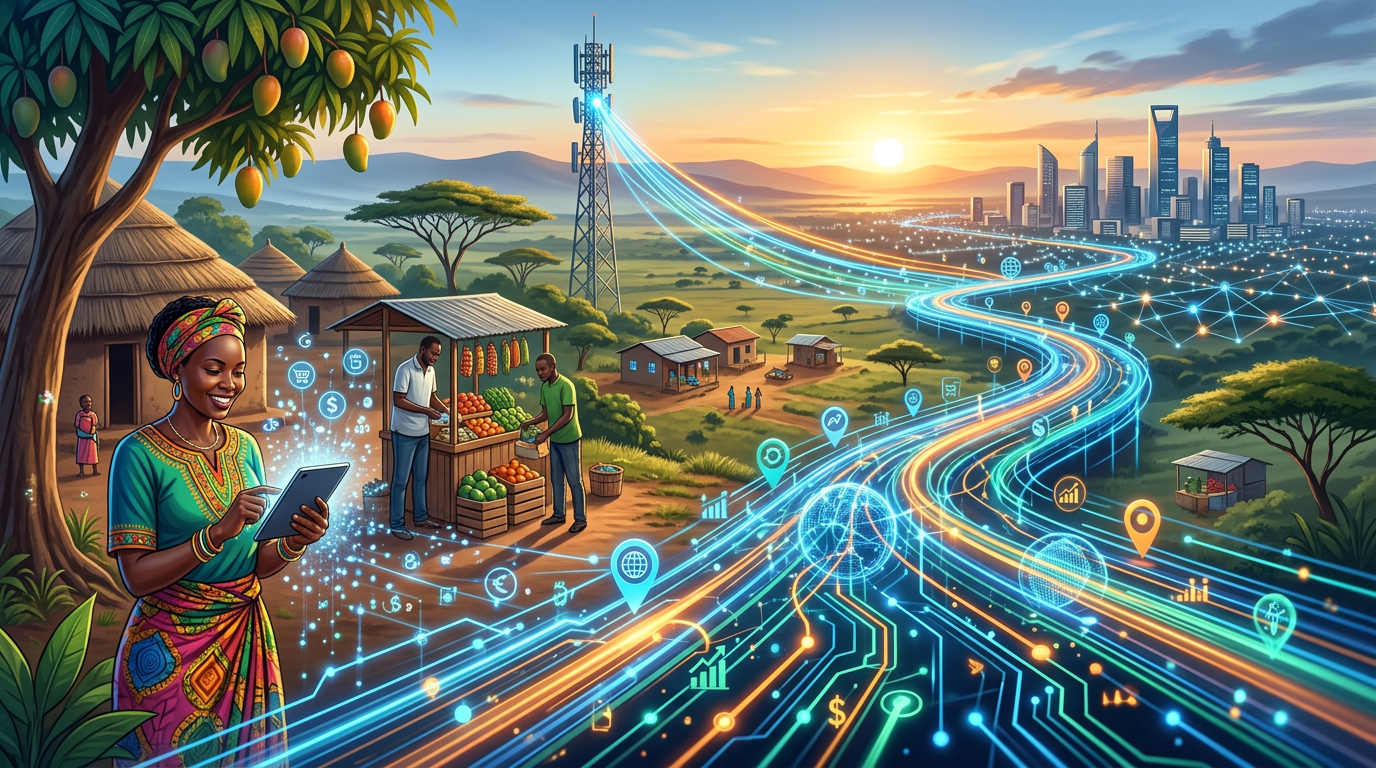
Kenya is currently witnessing a historic shift in its digital landscape, one that promises to rewrite the economic narrative of its rural heartlands. The "Digital Superhighway," a flagship project under the Bottom-up Economic Transformation Agenda (BETA), is not just a collection of fiber optic cables; it is a lifeline for millions of untapped entrepreneurs from Lodwar to Lunga Lunga. As the government aggressively pursues the installation of 100,000 kilometers of fiber optic cable, the barrier between urban innovation and rural potential is finally beginning to dissolve.
For years, the "digital divide" was a common phrase used to describe the disadvantage faced by businesses outside of Nairobi and Mombasa. High data costs and erratic connectivity meant that a talented artisan in rural Marsabit had little chance of competing with a well-connected business in Westlands. However, with the ICT Authority spearheading the rollout of over 25,000 public Wi-Fi hotspots, the "Digital Superhighway" is turning every village into a potential tech hub.
At Rawlinz Designs, we have watched this evolution closely. As a premier provider of software development services in Kenya, we recognize that the next wave of billion-shilling startups won't just come from the Silicon Savannah’s co-working spaces. They will emerge from the small towns where entrepreneurs are now empowered by high-speed internet to build globally viable digital products.
Key Takeaways
- Connectivity as a Right: The Digital Superhighway aims to lay 100,000km of fiber, significantly lowering the cost of doing business in rural areas.
- Market Access: Rural entrepreneurs can now bypass middlemen by using e-commerce platforms to reach national and international markets directly.
- Public Wi-Fi Impact: The 25,000 planned public Wi-Fi hotspots are turning market centers into digital trading zones, facilitating instant mobile payments and inventory tracking.
- Government Digitization: Over 5,000 government services have moved online (e-Citizen), reducing the time and cost for rural business owners to acquire permits and licenses.
- Skill Democratization: Reliable internet allows rural youth to access global remote work opportunities and high-level tech education previously restricted to the capital.
The Backbone of Kenya's Digital Revolution 🌐
The Digital Superhighway is the infrastructure intended to propel Kenya into the Fourth Industrial Revolution. According to the ICT Authority of Kenya, the project focuses on infrastructure, data protection, and digital skills. By prioritizing fiber connectivity in the "last mile," the government is ensuring that the internet is no longer a luxury but a fundamental utility, much like water and electricity.
For a rural entrepreneur, this means more than just browsing social media. It means a farmer in Makueni can use IoT sensors to monitor soil moisture and access real-time market prices via cloud-based platforms. It means a school in Homabay can offer the same coding curriculum as a private academy in Nairobi, fostering a new generation of developers who may eventually showcase their talent in our work portfolio.
Statistics from the Communications Authority of Kenya indicate that mobile data penetration continues to rise, but the Digital Superhighway shifts the focus from expensive mobile bundles to affordable, high-speed terrestrial fiber. This shift is expected to increase Kenya's GDP by billions of shillings as rural productivity skyrockets.
Breaking the Middleman Monopoly
Historically, rural entrepreneurs were at the mercy of intermediaries. Whether it was selling agricultural produce or handmade crafts, the lack of information and logistical connectivity meant the producer took home the smallest slice of the profit. The Digital Superhighway changes this dynamic entirely.
With high-speed internet, a weaver in Kitui can set up a Shopify store or leverage Instagram to sell directly to customers in London or New York. The ICT Authority has been instrumental in setting up "Digital Hubs" in every ward, providing the physical space and connectivity for these entrepreneurs to manage their digital storefronts. This direct-to-consumer model is revitalizing village economies and encouraging the youth to stay in their home counties rather than migrating to congested cities.
"The infrastructure being laid today is the bridge that will carry Kenya's rural economy into the global marketplace. Connectivity is the ultimate equalizer." — Industry Analysis, Rawlinz Designs
Public Wi-Fi: Turning Markets into Tech Hubs 📶
One of the most visible components of the Digital Superhighway is the deployment of free public Wi-Fi in markets and bus parks. For many small-scale traders (Mama Bogas) and boda-boda operators, data costs were a significant operational expense. By removing this barrier, the government has enabled these micro-entrepreneurs to adopt digital payment systems and digital record-keeping.
When a trader in a rural market can use free Wi-Fi to process KRA transactions or manage their stock through a cloud-based app, their efficiency doubles. This is where Rawlinz Designs comes in; we help these emerging businesses build lightweight, mobile-responsive applications that run perfectly even in varied connectivity environments. If you are a rising entrepreneur looking to capitalize on this, you can request a quote for a custom solution today.
How This Impacts Kenyan Businesses
The ripple effects of the Digital Superhighway are being felt across every sector. Here is a deep dive into the specific impacts on Kenyan enterprises:
1. Decentralization of Talent
Previously, tech companies had to be based in Nairobi to access stable internet and a skilled workforce. Now, with the ICT Authority ensuring connectivity in the wards, "Silicon Villages" are emerging. This allows companies to hire remote talent from across the country, reducing overhead costs and spreading wealth more equitably.
2. Growth of FinTech and AgriTech
Rural areas are the primary beneficiaries of AgriTech innovations. Reliable internet allows for the deployment of sophisticated supply chain management software. Businesses can now track the journey of a bag of coffee from a small farm in Nyeri to a roaster in Europe with 100% transparency, thanks to blockchain and high-speed data transfer.
3. Reduced Cost of Compliance
Government digitization means rural entrepreneurs no longer need to travel hundreds of kilometers to Nairobi to register a business or file taxes. Everything is now available at their fingertips. This ease of doing business encourages the formalization of thousands of SMEs, which in turn increases the national tax base and provides these businesses with access to credit.
4. Enhanced Education and Training
The Digital Superhighway supports the Jitume program, which aims to provide students with digital skills. As more rural youth become proficient in digital marketing, web development, and data analysis, the pool of local talent grows, providing fuel for Kenyan software firms like Rawlinz Designs to expand their impact.
Facing the Challenges: The Path Ahead
While the progress is commendable, challenges remain. The "last mile" connectivity—connecting the fiber from the main road to the actual doorstep of a rural business—is still a work in progress. Additionally, there is a significant need for digital literacy training so that the Kenya Tech revolution doesn't leave the older generation behind.
According to the World Bank's Kenya Economic Update, digital technologies could create up to 1.1 million additional jobs in Kenya by 2025. However, this is contingent on the successful completion of the infrastructure projects and a supportive regulatory environment that protects data privacy and cybersecurity.
The Role of Software Development in the New Era
Infrastructure is only half the battle. The "highway" needs "vehicles"—which in this case are the apps, platforms, and websites that rural entrepreneurs will use to conduct business. At Rawlinz Designs, our mission is to build these vehicles. We specialize in creating robust digital platforms that are optimized for the Kenyan market.
Whether it’s an e-commerce platform for a rural cooperative or a custom ERP system for a growing county-based manufacturer, the software must be intuitive and reliable. The Digital Superhighway provides the "road," and we provide the "engine" that drives growth. Our team is dedicated to ensuring that the ICT Authority’s vision of a digitally empowered nation becomes a reality through high-quality code and innovative design.
Conclusion: A Future Without Boundaries
The Digital Superhighway is more than just an ICT project; it is a catalyst for social and economic transformation. By empowering rural entrepreneurs, Kenya is tapping into its most significant resource: its people. As the distance between the "village" and the "global market" shrinks to the click of a button, the potential for innovation is limitless.
At Rawlinz Designs, we are proud to be part of this journey. We invite you to explore our portfolio to see how we’ve helped businesses across Kenya scale through technology. The future of Kenya is digital, and that future is being built today in the most unexpected places.
Are you ready to take your business to the next level and leverage the power of Kenya's new Digital Superhighway? Whether you need a high-converting website, a custom mobile app, or a comprehensive digital strategy, Rawlinz Designs is your trusted partner. Our experts understand the local landscape and global standards, ensuring your business stays ahead of the curve.
Don't let your location limit your potential. Let's build the future together. Get a free quote today or contact us to learn how we can transform your rural enterprise into a digital powerhouse.
Comments
No comments yet. Be the first to share your thoughts!