Humanoid Robots in 2026 — The Machines Are Clocking In for Work
For years, humanoid robots were the flashy demo nobody took seriously. In 2026, they're showing up to work. Tesla, Boston Dynamics, LG, and a wave of Chinese manufacturers are deploying real robots into real factories and the implications for every business on the planet are enormous.
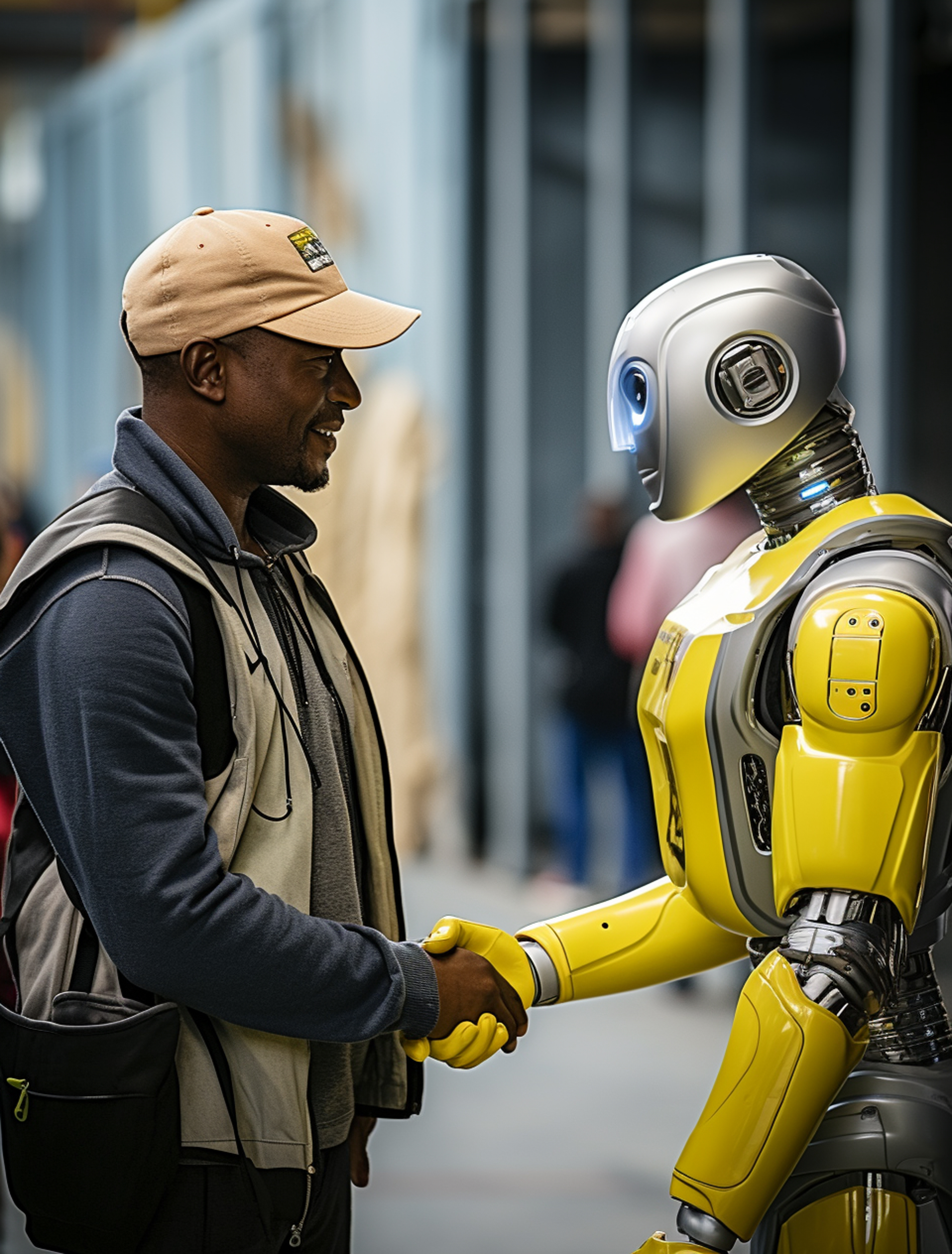
Introduction
For decades, humanoid robots lived in science fiction the shiny promise of a future that always seemed ten years away. Then 2026 arrived, and something quietly but fundamentally shifted.
The robots stopped demoing. They started working.
For years, humanoid robots at major tech shows felt like carefully controlled previews of a distant future impressive, but safely confined to prototypes and concept demos. CES 2026 marked a clear break from that pattern. This year, humanoid robots didn't just pose for cameras or repeat scripted movements. They actually worked from factory floors and hospital environments to home kitchens and service desks. Companies showcased robots that are already shipping, already deployed, or scheduled for real-world rollout in 2026. Tech Startups
This is no longer a story about the future. It's a story about right now.
The Scale of What's Happening
Before we get into the specific robots and companies, let's put the scale of this moment in context.
Global humanoid robot shipments totaled just 13,317 units last year. That is a tiny base for an industry expected to nearly double annually and reach 2.6 million units by 2035. ScienceDaily
The convergence of advanced foundation models with maturing hardware is transforming robots from single-purpose machines into adaptive, general-purpose systems. As Jan Liphardt, CEO of robotic software company OpenMind, put it: "Robotics isn't new. But what's fundamentally different now is firstly that the hardware for universal and humanoid robots is maturing extremely quickly, meaning low-cost, reliable hardware is finally here." Tech Startups
Low-cost. Reliable. Those two words matter enormously. Humanoid robots have always been technically impressive. What's new in 2026 is that they're becoming economically viable.
The Robots That Are Already Working
Let's look at who's actually shipping, deploying, and putting robots to work today.
Boston Dynamics' Electric Atlas — The Industrial Workhorse
At CES 2026, Boston Dynamics formally introduced the production-ready version of its electric Atlas humanoid. Designed for industrial deployment, the new Atlas features 56 degrees of freedom, a 7.5-foot reach, and a lifting capacity of 110 pounds. It is built for continuous operation, with a 4-hour battery and hot-swappable autonomy. Tech Startups
Boston Dynamics confirmed that initial units will be deployed in 2026 at Hyundai's Metaplant in Georgia, signaling Atlas's transition from research platform to commercial workforce robot. Tech Startups This is not a pilot programme. This is a production vehicle manufacturing plant deploying humanoid robots on its assembly lines today.
Tesla Optimus Gen 2 — The Most Watched Robot on Earth
Tesla's Optimus has attracted more public attention than any other humanoid, thanks largely to Elon Musk's aggressive public timeline and Tesla's massive brand presence.
Optimus Gen 2 features improved joint articulation and a sleeker design compared to its predecessor. It's built to handle repetitive tasks, assist in manufacturing, and even perform home automation functions all while learning from real-world data. TechRadar
Tesla has been running Optimus units inside its own factories for over a year now, building real-world operational data that feeds back into the robot's training. The strategy is characteristically Musk: deploy early, learn fast, iterate aggressively.
LG CLOiD — The Home Robot Is Finally Here
LG Electronics debuted CLOiD at CES 2026 as the physical centerpiece of its "Zero Labor Home" vision. Unlike conceptual home robots, CLOiD was demonstrated performing real household tasks in a staged living environment including folding laundry, loading a dishwasher, and preparing food using standard appliances. The robot features a wheeled base for stability and a height-adjustable torso, with dual arms offering seven degrees of freedom each, paired with five-fingered hands for fine object manipulation. Tech Startups
LG's vision of a "Zero Labor Home" a household where routine chores are handled entirely by robots would have sounded absurd in 2020. In 2026, it has a product launch behind it.
1X's NEO — Coming to Your Home This Year
NEO is a general-purpose humanoid robot designed to operate safely and naturally in human environments, with a primary focus on the home. Built around AI autonomy, NEO is intended to perform everyday tasks in unstructured settings rather than fixed industrial cells. 1X has opened preorders for NEO, with first customer deliveries planned for 2026. Tech Startups
Unitree — The Affordable Disruptor
Unitree Robotics showcased its full humanoid lineup at CES 2026, including the G1, H2, and R1, positioning the company as a major player in mass-market humanoid robotics. The G1 drew particular attention through live demonstrations featuring high-speed martial arts and boxing-style movements, emphasizing balance, agility, and motor control. Tech Startups
Unitree highlighted its shift toward a Robot-as-a-Service model, indicating readiness for global commercial deployment rather than experimental use. Tech Startups The Robot-as-a-Service model is important it means businesses can deploy humanoid robots without the enormous upfront capital cost, paying instead on a subscription or usage basis. This dramatically lowers the barrier to adoption for small and medium businesses.
China Is Winning the Early Race
The geopolitics of humanoid robotics is one of the most important and underreported stories of 2026.
At this early stage of humanoid robot development, Chinese companies are outpacing their US rivals in both speed and volume. The top humanoid robot makers by 2025 shipments were led by China's Agibot and Unitree, followed by UBTech, Leju Robotics, Engine AI, and Fourier Intelligence. ScienceDaily
China's leadership is best understood as a speed-to-scale advantage. The ecosystem there compresses the entire cycle R&D, supply chain, manufacturing, integration, and customer deployment into a very tight loop. That means humanoid companies can move from prototype to real-world deployment faster, learn from real operations, and iterate at a pace that is difficult to match elsewhere. ScienceDaily
China's humanoid robots grabbed global attention with kung fu flips at the nation's televised Spring Festival Gala, while Chinese phone maker Honor unveiled its first humanoid robot at MWC in Spain. ScienceDaily When a government puts robots on its most-watched national television event of the year, it's signaling something deliberate about national industrial strategy.
The 2026 wave of humanoid robot expansion is, in essence, a coming-of-age ceremony for China's humanoid robot industry. From the tech carnival at CES to scenario implementation in the Dubai desert, Chinese humanoid robots are moving out collectively. GameTyrant
The US still leads in cutting-edge research and premium industrial applications. But China is winning on volume, speed, and price and in technology markets, volume and price often determine who defines the standard.
Where the Robots Are Actually Working Right Now
Let's be specific. Because one of the persistent criticisms of humanoid robotics has been that the demos are impressive but the real-world deployments are thin. In 2026, that criticism is becoming harder to sustain.
Warehouses and Logistics: This is the biggest near-term deployment category. Agility Robotics is ramping production at its RoboFab facility from hundreds of Digit units toward thousands, while deepening deployments in logistics centres. Amazon which backs Agility is reportedly taking its own long look at package delivery via humanoid robots. Tech Startups
Automotive Manufacturing: Apptronik and Mercedes plan to expand Apollo testing beyond initial German and Hungarian plants, with other carmakers watching closely. Figure 01 and 02 are already working shifts at BMW. Tech Startups
Healthcare and Rehabilitation: Fourier's GR-1 is already helping with patient mobility in hospital settings and is one of the few humanoids getting hospital floor time right now. TechRadar
Xiaomi's Factories: Xiaomi's humanoid robots have begun trial operations at its automobile factory, achieving autonomous operations in tasks such as loading self-tapping nuts at assembly stations and transporting material boxes, with key performance indicators including mean time between failures and single-task success rates steadily improving. Tech Startups
The pattern is consistent: real deployments in 2026 are concentrated in logistics, simple handling, and repetitive motions. The robots are not yet performing fine assembly or complex judgment tasks in human-dense environments. But the trajectory is unmistakably clear.
What Does a Humanoid Robot Cost?
The question every business owner wants answered.
Most full-size humanoids in 2026 cost between $50,000 and $150,000, depending on the use case. Apptronik is targeting a sub-$50,000 price tag for its Apollo robot, positioning it as an affordable option for large-scale deployment. TechRadar
For context, the average annual cost of a warehouse worker in the US including benefits is approximately $45,000–$55,000. At those price points, the business case for humanoid robots in high-turnover, physically demanding roles begins to make mathematical sense especially when you factor in 24/7 operation capability, no sick days, and continuous performance improvement through software updates.
The Robot-as-a-Service model being adopted by companies like Unitree pushes the upfront cost even lower, replacing capital expenditure with a monthly or per-task fee structure. For businesses without large capital budgets, this could be the model that makes humanoid robotics accessible.
The Real Challenges Nobody Is Ignoring
Honesty matters here. The humanoid robotics industry is real and accelerating but it also faces genuine, significant challenges that will shape how quickly it scales.
Safety, privacy, and technological immaturity remain major barriers. Teleoperation raises concerns about surveillance, while robotics foundation models still lack the robustness needed for widespread deployment. Integration expertise is also in short supply. Tech Startups
There is also macroeconomic exposure. Humanoids and smart robots are intrinsically tied to the success of AI. If the AI bubble bursts, robotics innovators are highly exposed. Tech Startups
Large-scale deployment in factories or public spaces will depend on safety standards, union agreements, and liability rules as much as on AI models and actuators. Businesses must decide how to get robots to move quickly and do their work fast, in a way that also guarantees safety when working alongside humans. Tech Startups
And there's the question of jobs. The elephant in the room of every robotics conversation. The honest answer is nuanced: robots are not replacing all work, but they are unambiguously replacing specific categories of work repetitive, physically demanding, dangerous, and predictable tasks. New categories of work are emerging around robot supervision, maintenance, programming, and integration. But the transition will not be seamless, and the businesses and governments that plan for it proactively will fare far better than those that pretend it isn't happening.
What This Means for African and Kenyan Businesses
You might be wondering: humanoid robots in Nairobi? Isn't that decades away?
Maybe for widespread consumer deployment. But for the implications of this shift the ripple effects on global labour markets, manufacturing costs, import prices, and the digital economy the timeline is much shorter.
As humanoid robots reduce labour costs in global manufacturing, the price of imported goods electronics, vehicles, machinery, consumer products will shift. Supply chains will be restructured. The comparative advantages that have historically made certain manufacturing categories viable in specific geographies will change.
More immediately, the software and digital infrastructure supporting robot deployment management platforms, monitoring dashboards, integration APIs, data pipelines represents a significant opportunity for African tech companies. The robots need software as much as they need hardware.
And for businesses thinking about automation right now, the humanoid robot story is a reminder that the broader automation wave robotic process automation, AI-powered workflows, smart software systems is already here and already accessible. You don't need a $100,000 robot to automate the repetitive, time-consuming parts of your business. You need smart software built by the right team.
At rawlinzdesigns.co.ke, we help businesses automate intelligently building custom software solutions, AI-integrated workflows, and digital products that free your team from repetitive tasks so they can focus on what humans do best: think, create, and build relationships.
The Bottom Line
The humanoid robot revolution arrives not with a single headline robot, but with a slow, contested spread of machines into the dull, dangerous, and dirty corners of work — and eventually, domestic life. Tech Startups
2026 is shaping up to be pivotal for robotics as humanoids become increasingly sophisticated, with models moving from pilot projects and lab-based demos to real-world deployments. Tech Startups
The machines are clocking in. The question for every business in Nairobi, New York, or anywhere in between is not whether this changes your world. It is how fast, and what you're going to do about it.
Want to future-proof your business with smart automation and AI-integrated digital solutions? Talk to us rawlinzdesigns.co.ke— we build the digital infrastructure that keeps your business ahead of the curve.
Further Reading:
9 Humanoid Robots at CES 2026 That Showed the Future Is Already Here — Interesting Engineering
Why China's Humanoid Robot Industry Is Winning the Early Market — TechCrunch
Robotics in 2026: Building the Business Case for Humanoids — AI Business
Top 12 Humanoid Robots of 2026 — Humanoid Robotics Technology
Comments
No comments yet. Be the first to share your thoughts!