Bluesky Gets a New CEO — And the War for the Future of Social Media Heats Up
Bluesky just changed its CEO. Jay Graber the developer who built it from nothing is stepping back. Toni Schneider is taking over. With 40 million users and a decentralised architecture that no billionaire can control, Bluesky is now the most important social media story of 2026. Here is everything you need to know.
Introduction
When Elon Musk completed his acquisition of Twitter in October 2022 and promptly renamed it X, fired most of the staff, reinstated banned accounts, and restructured the platform's moderation policies tens of millions of users looked for alternatives.
Mastodon captured some of them. Threads, Meta's Twitter alternative, captured more. But neither has emerged as the clear successor to what Twitter was at its best: a real-time, global, text-first platform for journalists, researchers, technologists, and engaged citizens.
Bluesky is making the strongest case.
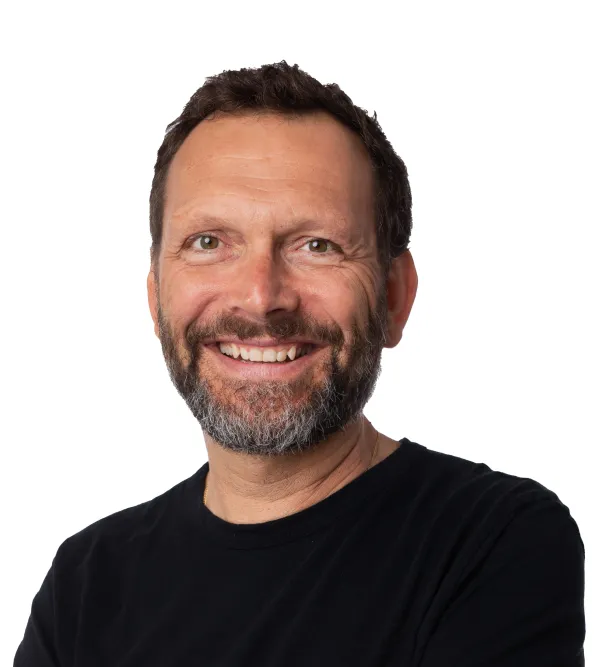
Bluesky CEO change: Jay Graber stepping back, Toni Schneider named interim boss. Instagram
The leadership transition at Bluesky marks a significant moment in the platform's evolution from a developer-led experiment to a professionally managed company with genuine scale ambitions. Here is the full story.
What Is Bluesky and Why Does It Matter?
Bluesky started as a Twitter-funded research project into decentralised social media architecture. When Musk acquired Twitter, Bluesky became an independent company — and suddenly found itself positioned as the principled alternative to a platform many users felt had lost its values.
The core technical innovation of Bluesky is the AT Protocol a decentralised architecture that means no single company can control the entire social graph. Your followers, your posts, and your identity on Bluesky are theoretically portable you could take them to a different platform built on the same protocol without losing anything.
This is a fundamentally different model from X, Instagram, Threads, or any traditional social network, where your social graph is owned by the platform and cannot be exported. The AT Protocol is the open-source infrastructure equivalent of email anyone can build a client on top of it, and no single company controls the underlying layer.
The Numbers: Bluesky's Growth Is Real
Bluesky's growth has not followed the dramatic spike-and-decline pattern of many Twitter alternatives. It has grown steadily with significant surges every time X makes a controversial policy change and it has retained users at a higher rate than competitors.
The platform now has over 40 million registered users and a highly engaged core community that skews toward journalists, academics, technologists, and policy professionals — precisely the audience that made Twitter valuable as a source of real-time, high-quality information.
When X experienced major outages or introduced unpopular changes in 2025, Bluesky's sign-up numbers spiked immediately a pattern that suggests the platform has become the established fallback option for users who want a Twitter-like experience without Musk's influence.
Jay Graber Steps Back — Toni Schneider Steps In
Jay Graber built Bluesky from the ground up. She turned a research project into a real product, navigated the transition from a Twitter subsidiary to an independent company, and grew it to 40 million users on a modest budget and a small team.
Her decision to step back from the CEO role is described internally as a transition Graber will remain involved with the company, but day-to-day leadership passes to Toni Schneider, a veteran tech executive with significant experience scaling consumer internet products.
The transition is a classic founder-to-operator handoff: the visionary who builds the thing steps aside to let a professional manager scale it. When it works well as it did at Twitter itself in its early years it accelerates growth and professionalises operations without losing the product vision. When it works poorly, it introduces culture clash and strategic drift.
The early signals are cautious but positive. Schneider has been publicly supportive of Bluesky's decentralisation mission and has not indicated any desire to pivot the platform toward the advertising-heavy, engagement-maximising model that users are fleeing.
What This Means for the Social Media Landscape
The social media landscape of 2026 is more fragmented than at any point in the past decade. X remains dominant by raw user numbers but has lost significant credibility among advertisers and high-value users. Threads has hundreds of millions of accounts but low engagement. LinkedIn is thriving as professional networking becomes more valuable. TikTok continues to dominate short video.
In the text-first, real-time discussion space that Twitter once owned, the battle is genuinely open. Bluesky has the most committed developer community, the most principled architecture, and the clearest alternative vision. Whether Toni Schneider can translate those advantages into mainstream growth without compromising the qualities that made the platform attractive in the first place is the defining question for Bluesky in 2026.
For Kenyan users: Bluesky has a growing African and Kenyan community particularly among journalists, academics, and tech professionals. Its chronological feed, lack of algorithmic manipulation, and absence of Musk's political influence make it particularly attractive for users who want a platform that amplifies quality content rather than engagement-maximising outrage.
The Bottom Line
Bluesky has a new CEO. It has 40 million users. It has the most principled decentralised architecture of any major social platform. And it is the strongest challenger to X's remaining dominance in real-time text-based social media.
The war for the future of social media is far from over. But in 2026, Bluesky is the most interesting fighter in the ring.
Further Reading:
Comments
No comments yet. Be the first to share your thoughts!